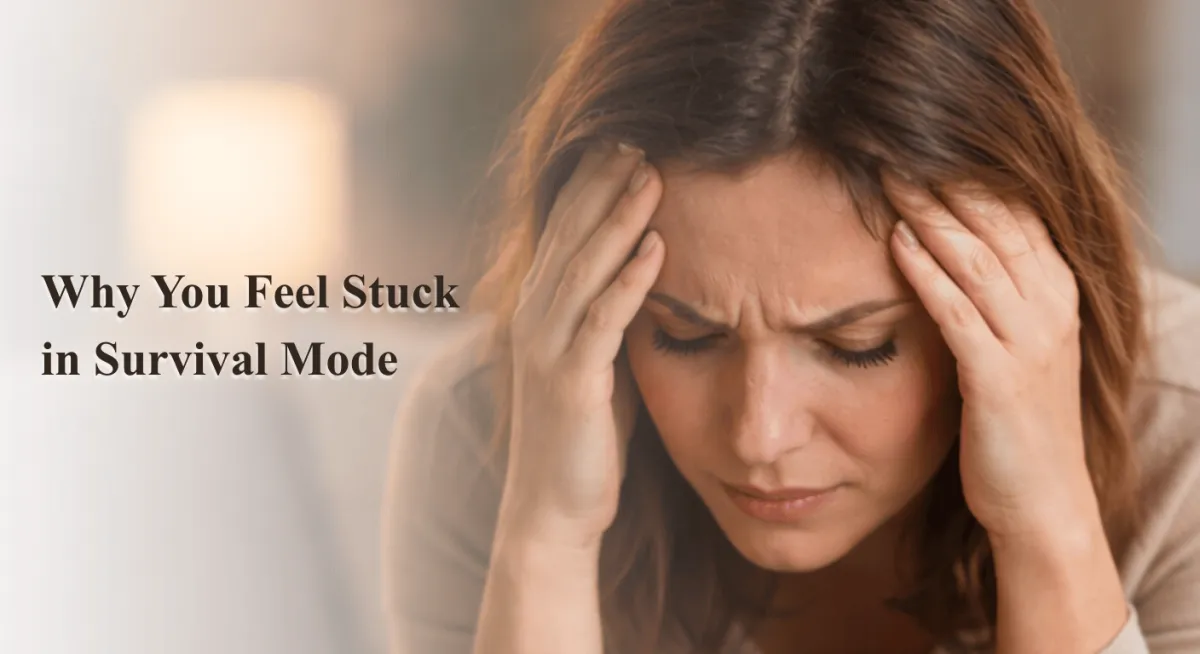
Why You Feel Stuck in Survival Mode
Why You Feel Stuck in Survival Mode
If you feel like you’re constantly alert, tense, or bracing for something to go wrong, even when life looks “fine” on the outside, you may be living in survival mode. Many people don’t realise that survival mode is often the long-term echo of past overwhelming experiences, moments when your system learned that staying on high alert was necessary to get through.
Survival mode isn’t a mindset problem. It’s a protective response rooted deep in the nervous system.
What Survival Mode Really Is
Survival mode is the state your body enters when it senses danger. Your nervous system shifts into protection, prioritising alertness, control, and readiness over rest, connection, and ease.
This response is incredibly helpful during genuinely threatening situations. But when someone has lived through emotionally overwhelming experiences, especially repeatedly or without enough support, the body may never fully return to a calm baseline.
Instead, survival mode becomes the default.
How Past Experiences Keep Survival Mode Active
When you’ve lived through experiences that felt unsafe, unpredictable, or emotionally intense, your nervous system adapts. It learns patterns like:
Stay alert to avoid being hurt
Don’t relax, something bad could happen
Handle everything alone
Suppress feelings to cope
Even when those situations are long over, the body may still respond as if they’re happening now. Survival mode is not about the present moment, it’s about what your system learned in the past.
Signs Survival Mode Is Linked to Old Wounds
Survival mode connected to past experiences often shows up quietly and persistently.
You might notice:
Feeling tense or “wired” most of the time
Difficulty relaxing or switching off
Strong emotional reactions that seem bigger than the situation
Emotional numbness followed by sudden overwhelm
Being highly self-reliant and struggling to ask for help
Trouble sleeping or feeling rested
Feeling disconnected from yourself or others
These are not personality traits, they are survival responses.
Why You Can’t Just Think Your Way Out of Survival Mode
Many people try to reason with survival mode: “I’m safe now.” But survival mode doesn’t respond to logic. It responds to felt safety.
When the body has learned through experience that danger or emotional pain can appear suddenly, it stays ready. Relaxation can even feel uncomfortable at first because vigilance once meant protection.
This is why slowing down can feel unsettling instead of calming.
How Healing Helps You Leave Survival Mode
Gently leaving survival mode means helping your nervous system learn that safety exists now, not forcing it to shut down protection.
Helpful steps include:
1. Working With the Body
Breathing, grounding, and gentle movement help send signals of safety that words alone can’t provide.
2. Building Emotional Safety
Consistent routines, clear boundaries, and predictable support help reduce the need for constant alertness.
3. Understanding Your Responses
When you recognise that your reactions make sense given what you’ve lived through, shame softens and healing can begin.
4. Processing What Was Never Resolved
Supportive therapy helps the nervous system complete unfinished stress responses, allowing survival mode to gradually loosen its grip.
What Changes When Survival Mode Eases
As survival mode settles, many people notice:
Less tension and anxiety
More emotional space
Improved sleep and energy
Deeper connections with others
A sense of calm that feels real and sustainable
Life no longer feels like something you’re just getting through.
You’re Not Broken, You Adapted
Being stuck in survival mode doesn’t mean something is wrong with you. It means something happened that required strength, alertness, and endurance.
With the right support, your nervous system can learn that it no longer has to work so hard.
Caroline Reed supports women who feel trapped in survival mode, helping them gently reconnect with safety, stability, and themselves at a pace that feels manageable.
You can book a free, confidential call at pages.caroline-reed.com to explore what support might look like for you.
You deserve a life that feels safe, not just survivable.
